


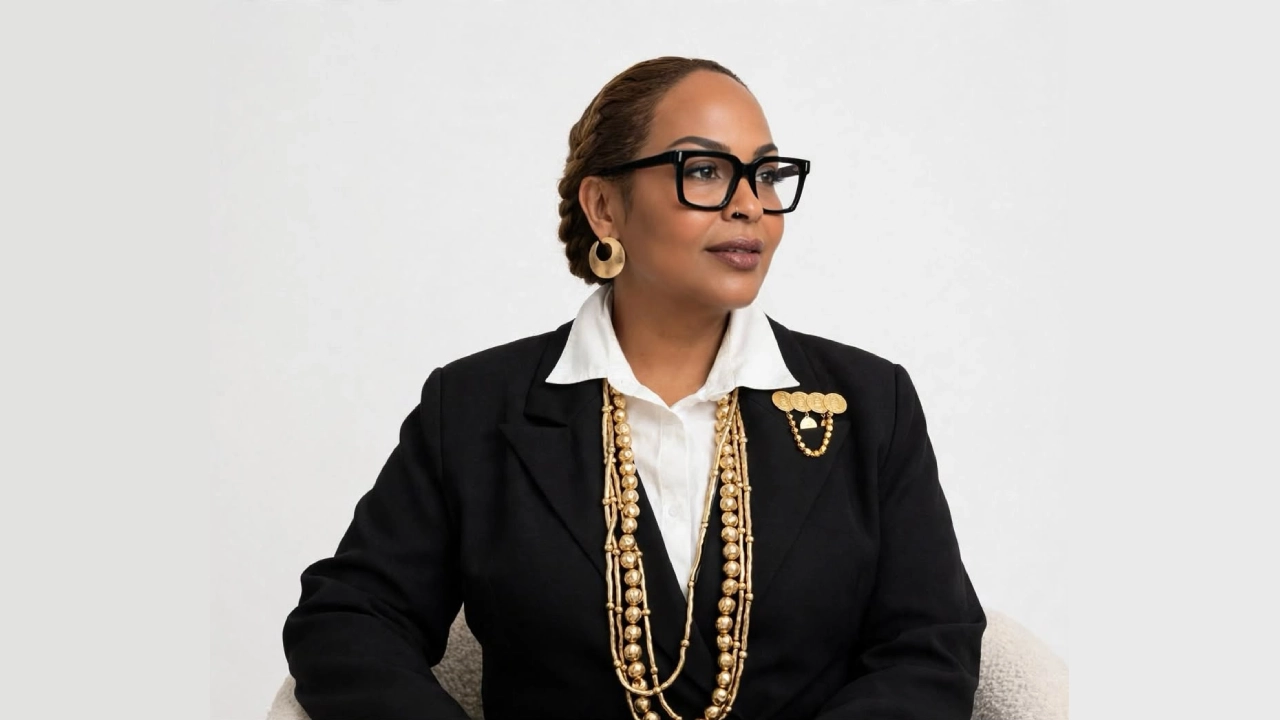
I am Hiba Elbashir, a Sudanese designer, stylist, and creative director, and the founder of Diba Fashion House, now based in Dubai.
My journey began with a degree in Psychology and Preschool Education and work supporting children and communities. Those experiences shaped my understanding of people, belonging, and how we express who we are—questions that would later become central to my creative work.
For seventeen years, I have explored fashion as a language of identity, with Sudanese Damour cotton at the heart of my practice. Through Diba, I bring heritage into contemporary silhouettes, creating pieces that carry memory while opening space for new expression.
After the war in Sudan, I rebuilt my business in the UAE, carrying that creative purpose with me. My journey has since taken my work into international collaborations and conversations about fashion and culture.
I began by telling stories through clothes. Over time, I realised I was also telling my own.
Diba began with a conviction: our heritage deserves a place in the future of fashion.
Growing up as the daughter of an a father who has the artistic vision as well a doctor I learned to see stories in colour, texture, and everyday details. Sudanese culture gave me a rich visual language, and I wanted to express it through pieces every one could wear and make part of their own stories.
Damour cotton became central to that vision. In its simplicity, I saw extraordinary possibilities—a fabric deeply connected to home, with the potential to speak to people far beyond it.
I founded Diba Fashion House to explore those possibilities and build a creative identity rooted in where I come from. Seventeen years later, that purpose remains: to bring Sudanese heritage into new spaces while keeping its voice unmistakably its own.
My background in psychology also influences my approach. I listen to how a the client sees themselves , what makes them comfortable, and what they wants to express. Those conversations shape the design as much as her measurements do.
What makes each piece distinctive is that meeting of cultural identity and personal expression. I want every one to recognise something of them self in the finished piece, while discovering a new way to express.
I chose Sudanese Damour cotton because I see both my roots and creative possibility in it. Its natural texture, simplicity, and connection to everyday Sudanese life make it deeply meaningful to me.
Working with one fabric over many years has taught me to look more closely. Each fold, cut, and silhouette reveals another possibility. Its simplicity challenges me to create distinction through design and craftsmanship.
There is also a personal responsibility behind that choice. When a fabric carries memories of home, giving it a contemporary life becomes a way of keeping those connections alive and introducing them to new audiences.
I have often expressed my approach this way: “I never asked our Sudanese Damour to change. I changed the way the world looks at it.”
In 2026, I celebrated that journey through “The Identity — In Another Language,” an exhibition in Dubai bringing together fashion, art, and the story of Sudanese Damour. It allowed me to present the thinking, memories, and cultural purpose behind my work.
Other significant milestones include receiving the Best Fashion Show Award in Cairo in 2022, participating in the Katara exhibition in Qatar during the World Cup that year, and speaking at the Saudi Fashiontex Expo in Jeddah about fashion beyond clothing.
Being selected to represent Sudan through a Thai silk collaboration was another meaningful step. My design, MADAR, brought Sudanese Damour cotton and Thai silk into one piece, expressing my belief that we can connect across cultures while retaining our own identity.
What makes these achievements meaningful to me is seeing a fabric I have worked with for years open doors to wider conversations about Sudanese creativity, heritage, and belonging.
i believe challenges started when u decided to start building different businesses but it continues with many of them depending on the scale of your brand but my biggest challenges was rebuilding Diba Fashion House in the UAE after the war in Sudan. It meant finding my place in a new market while carrying the emotional weight of events at home.
I have also worked to challenge perceptions of Damour, showing how a familiar Sudanese fabric can become contemporary, expressive fashion.
Balancing creativity with business has taught me to protect the value of my work, choose partnerships carefully, and adapt without losing my identity.
My greatest challenge was rebuilding Diba Fashion House in the UAE after the war in Sudan. It meant finding my place in a new market while carrying the emotional weight of events at home.
I have also worked to challenge perceptions of Damour, showing how a familiar Sudanese fabric can become contemporary, expressive fashion.
Balancing creativity with business has taught me to protect the value of my work, choose partnerships carefully, and adapt without losing my identity. Above all, I have learned how to begin again.